


Why is the rear shock absorber a core guarantee of vehicle smoothness and comfort?
Release Time : 2026-01-09
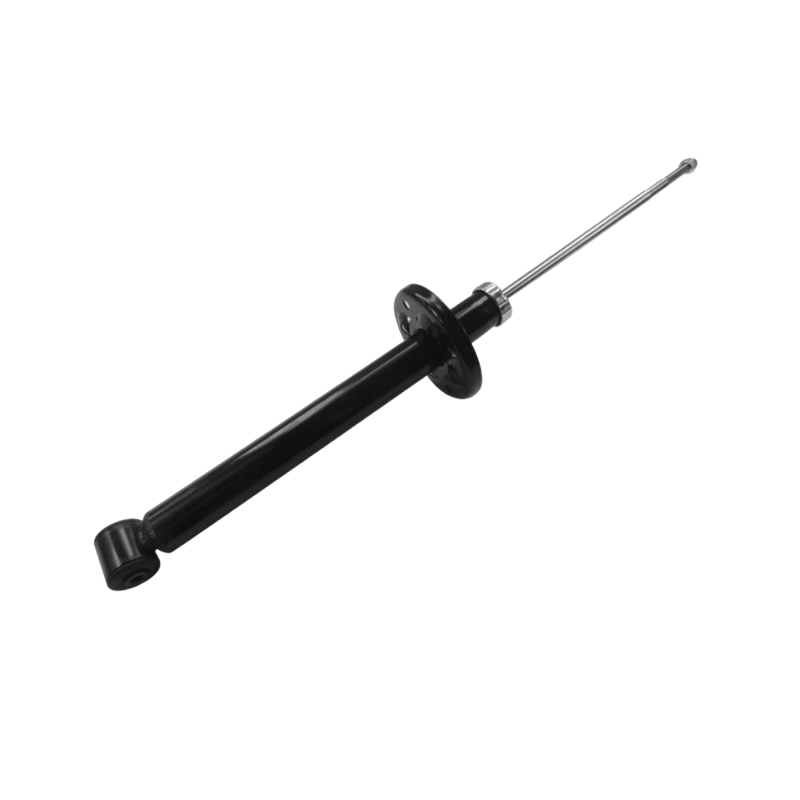
In daily driving, people often focus more on engine power, transmission smoothness, and even audio quality, easily overlooking a silent yet crucial component—the rear shock absorber. It doesn't generate power or directly participate in steering, yet acts like a "joint damper," silently absorbing impacts from the road surface and suppressing body sway, transforming rough bumps into a smooth journey. It can be said that without an efficient rear shock absorber, even the most luxurious seats cannot provide true comfort; even the most precise chassis tuning cannot escape the risk of loss of control. Therefore, the rear shock absorber is an irreplaceable core guarantee of vehicle smoothness and ride comfort.
When a vehicle travels over potholes, speed bumps, or gravel roads, the wheels bounce up and down due to the terrain. Without shock absorbers to restrain this, the suspension springs will repeatedly bounce after compression, causing continuous body sway. This not only makes passengers feel uncomfortable but also severely reduces the tire's contact with the road surface. The function of a rear shock absorber is to convert the energy released by the spring into heat energy and dissipate it rapidly through the cooperation of internal hydraulic fluid and a precision valve system, thereby quickly suppressing excess vibration. This seemingly minor process directly determines whether the vehicle body can "hold its own"—whether it rebounds smoothly after over a bump or experiences continuous jolts like a boat on waves. A high-quality rear shock absorber can complete damping adjustment in milliseconds, ensuring that the vehicle's posture remains under control.
Furthermore, the rear shock absorber plays a crucial role in the vehicle's dynamic balance. During acceleration, braking, or cornering, the vehicle's center of gravity shifts: during hard braking, the front of the car dips and the rear rises; during high-speed cornering, the outer suspension compresses and the inner suspension stretches. At this time, the rear shock absorber effectively suppresses the tendency of the rear to "nose-dive" or "fishtail" by providing appropriate damping force, maintaining rear axle grip and preventing loss of control due to rear wheel lift-off or slippage. Especially when fully loaded or towing, the increased rear weight places higher demands on the shock absorber's support and responsiveness. High-performance rear shock absorbers automatically adjust their damping characteristics according to the load, ensuring consistent vehicle stability whether unloaded or heavily loaded.
In terms of comfort, the rear shock absorber is crucial for the rear passenger experience. Since the rear seats in most vehicles are located above the rear axle, any vibrations from the rear wheels are directly transmitted to the passengers' hips and spine. Inferior or worn-out shock absorbers cannot effectively filter high-frequency, fine vibrations, easily leading to back pain and even motion sickness during long journeys. A well-designed rear shock absorber employs a non-linear damping strategy: softly absorbing shocks at low speeds and firmly damping at high speeds; quickly stiffening at high speeds or with large impacts to prevent significant body roll. This intelligent response ensures that comfort and handling coexist harmoniously.
Furthermore, the sealing and durability of the rear shock absorber are equally important for long-term safety. Industrial-grade oil seals and dust covers effectively prevent the intrusion of mud, water, and sand, avoiding wear on internal valve systems or emulsification of hydraulic oil. Even in high-temperature, high-humidity, or extremely cold environments, it maintains stable performance, preventing "shock absorber failure" caused by oil leaks. If the rear shock absorber malfunctions, not only will comfort plummet, but it will also accelerate uneven tire wear, shorten suspension life, and even lead to accidents due to rear axle loss of control during emergency maneuvers.
Ultimately, the value of the rear shock absorber lies in its unseen mechanical wisdom, "translating" complex road conditions into a smooth ride. It's quiet, yet protects the safety of every journey; unassuming, yet an invisible pillar of safety and comfort. When a car traverses rough terrain as if on flat ground, it's thanks to the rear shock absorber's millisecond-level precise response, fulfilling the gentlest promise to drivers and passengers: the road may be uneven, but the journey must be safe.
When a vehicle travels over potholes, speed bumps, or gravel roads, the wheels bounce up and down due to the terrain. Without shock absorbers to restrain this, the suspension springs will repeatedly bounce after compression, causing continuous body sway. This not only makes passengers feel uncomfortable but also severely reduces the tire's contact with the road surface. The function of a rear shock absorber is to convert the energy released by the spring into heat energy and dissipate it rapidly through the cooperation of internal hydraulic fluid and a precision valve system, thereby quickly suppressing excess vibration. This seemingly minor process directly determines whether the vehicle body can "hold its own"—whether it rebounds smoothly after over a bump or experiences continuous jolts like a boat on waves. A high-quality rear shock absorber can complete damping adjustment in milliseconds, ensuring that the vehicle's posture remains under control.
Furthermore, the rear shock absorber plays a crucial role in the vehicle's dynamic balance. During acceleration, braking, or cornering, the vehicle's center of gravity shifts: during hard braking, the front of the car dips and the rear rises; during high-speed cornering, the outer suspension compresses and the inner suspension stretches. At this time, the rear shock absorber effectively suppresses the tendency of the rear to "nose-dive" or "fishtail" by providing appropriate damping force, maintaining rear axle grip and preventing loss of control due to rear wheel lift-off or slippage. Especially when fully loaded or towing, the increased rear weight places higher demands on the shock absorber's support and responsiveness. High-performance rear shock absorbers automatically adjust their damping characteristics according to the load, ensuring consistent vehicle stability whether unloaded or heavily loaded.
In terms of comfort, the rear shock absorber is crucial for the rear passenger experience. Since the rear seats in most vehicles are located above the rear axle, any vibrations from the rear wheels are directly transmitted to the passengers' hips and spine. Inferior or worn-out shock absorbers cannot effectively filter high-frequency, fine vibrations, easily leading to back pain and even motion sickness during long journeys. A well-designed rear shock absorber employs a non-linear damping strategy: softly absorbing shocks at low speeds and firmly damping at high speeds; quickly stiffening at high speeds or with large impacts to prevent significant body roll. This intelligent response ensures that comfort and handling coexist harmoniously.
Furthermore, the sealing and durability of the rear shock absorber are equally important for long-term safety. Industrial-grade oil seals and dust covers effectively prevent the intrusion of mud, water, and sand, avoiding wear on internal valve systems or emulsification of hydraulic oil. Even in high-temperature, high-humidity, or extremely cold environments, it maintains stable performance, preventing "shock absorber failure" caused by oil leaks. If the rear shock absorber malfunctions, not only will comfort plummet, but it will also accelerate uneven tire wear, shorten suspension life, and even lead to accidents due to rear axle loss of control during emergency maneuvers.
Ultimately, the value of the rear shock absorber lies in its unseen mechanical wisdom, "translating" complex road conditions into a smooth ride. It's quiet, yet protects the safety of every journey; unassuming, yet an invisible pillar of safety and comfort. When a car traverses rough terrain as if on flat ground, it's thanks to the rear shock absorber's millisecond-level precise response, fulfilling the gentlest promise to drivers and passengers: the road may be uneven, but the journey must be safe.